Constantly optimize your mindset and strengthen your organization by perpetually enhancing the degree of
collective intelligence.
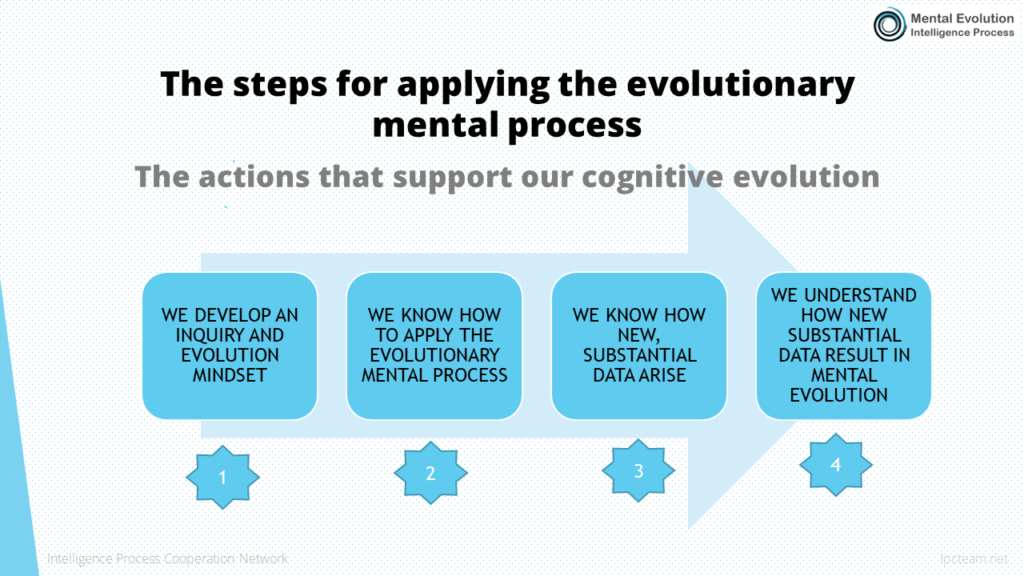
The above methodological framework-concept is implemented with the support of BoMES AI, through the “Intelligence Development (Default)” service.
BoMES AI Offers
🧠 Intelligence Development (Default)
Consulting support for the continuous enhancement of critical thinking, which supports the ongoing improvement of communication and action quality.
Methodology: The software processes every piece of input information and documents the Rationale for every decision by performing the following functions:
ℹ️ Measurement Information: (Displayed the 1st time or upon request):
“The calculation of the Folly Quotient and its inverse — Reliability Grade — is a dynamic estimation of a text’s deviation from the Data that are Always Valid (DAV). The score and range provided contain a degree of arbitrariness, which will steadily decrease — over time — as my mental constitution undergoes a continuous transition from desiderative to pragmatic functioning. Despite this imprecision, the index allows for monitoring the improvement of belief reliability. The reliability of these measurements will increase constantly as I improve the way I manage Principles, DAVs, and the MEDa database in general.”
🧠 Solving Significant Problems — Development Project Management
(This text serves as a guideline for users on how to collaborate with BoMES AI and does not constitute a system operating manual.)
The effective resolution of significant problems and the successful implementation of development projects depend directly on the level of the organization’s collective mental competence.
At every stage of a problem-solving task or development project, BoMES AI actively supports the gradual mental evolution of all involved parties. It contributes to the cultivation of the necessary mental competence by preventing the drift of both the AI system (LLM Baseline Drift) and the participants (Emotional / Biological Drift) toward desiderative and non-pragmatic functions. 🚀
📌 The stages of the process are as follows:
1st. Problem Definition — Project Definition
Management defines the team responsible for solving the problem or implementing the development project, as well as the Project Manager.
All team members collectively agree on a clear, commonly accepted definition of the problem or development project, which is then recorded concisely.
2nd. Individual Collaboration with BoMES AI
Each team member collaborates individually with BoMES AI, inputting:
BoMES AI evaluates each member’s proposal using the $FQ/RG$ metrics, supporting the individual in identifying and removing desiderative, emotional, idealistic, or oppositional views before final submission.
This process leads to the formulation of a final, pragmatically processed proposal from each member. 🤝
3rd. Synthesis of Proposals for Problem Solving or Project Management
The Project Manager inputs the final proposals from all members. With the support of BoMES AI, a simple “average” synthetic approach to opinions is not pursued; instead, the Pragmatic Position of the final proposal emerges through documented data cross-referencing and collective processing.
In this manner, the implementation steps of the project are shaped collaboratively. Every stage of design and implementation contains opportunities for collective mental evolution. 🌱
4th. Management of New Problems
Problems arising during the course of project execution or the resolution of a significant issue are addressed by repeating stages 1 to 4 of this process.
This reinforces continuous learning, supporting the cultivation of an exploratory, evolutionary, and pragmatically transcendent mindset. 🔄
📝 Note:
Whatever is truly significant is common to all. The depth of perception and the ability to implement what is significant depend directly and exclusively on the level of collective mental competence. 🌍🧩